
Not actual patients.
What to know as a caregiver
Caregiver information
HYMPAVZI is designed for ease of use

Subcutaneous delivery
HYMPAVZI is injected under the skin, not into a vein.

Once weekly
Once weekly dosing designed to fit into their schedule.

Fixed-dose,* prefilled pen
A set dose comes in each pen, so you don’t need to mix or measure.
HYMPAVZI is available in 75 mg and 150 mg pens. For children ages 6 to less than 12, the first dose (loading dose) is 150 mg on day 1. Then a weekly (maintenance) dose of 75 mg as prescribed by your healthcare provider. For adults and adolescents 12+, the first dose (loading dose) is 300 mg on day 1. Then a weekly (maintenance) dose of 150 mg as prescribed by your healthcare provider. If more than 1 injection is required to deliver a complete dose, administer each injection at a different site.
BASIS KIDS study objectives—with or without inhibitors
The primary objective is to evaluate the annualized bleed rate (ABR) of treated bleeds after 12 months of treatment with HYMPAVZI.
The secondary objectives of the study include evaluation of HYMPAVZI prophylaxis based on the occurrences of treated joint bleeds, treated target joint bleeds, treated spontaneous bleeds, and total bleeds. BASIS KIDS is an ongoing clinical study.
Frequency and severity of adverse events and serious adverse events observed with HYMPAVZI are also being studied.
BASIS KIDS Pre-Study Background
The efficacy of HYMPAVZI was based upon the ABR of treated bleeds of patients ages 6 to less than 18 during treatment with HYMPAVZI prophylaxis compared to past patient records collected in the 12 months before HYMPAVZI treatment.
- The ABR of treated bleeds for patients without inhibitors was 3.6, based on 12-month past bleeding history
- The ABR of treated bleeds for patients with inhibitors was 18.9, based on 12-month past bleeding history
See the results of the BASIS KIDS study†
BASIS KIDS study results—without inhibitors (n=36)
Without Inhibitors
Primary objective

Treated bleeds
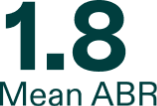
Secondary objective

Joint bleeds [treated]
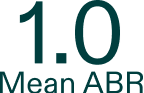

Target joint bleeds [treated]
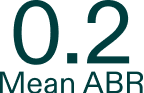

Spontaneous bleeds [treated]
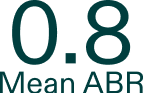

Total bleeds [treated and untreated]
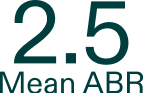
The mean is the average of a set of numbers. The median is the middle value in a set of numbers arranged from smallest to largest.
BASIS KIDS study results—with inhibitors (n=14)
With Inhibitors
Primary objective

Treated bleeds
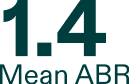
Secondary objective

Joint bleeds [treated]
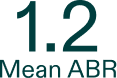

Target joint bleeds [treated]
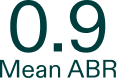

Spontaneous bleeds [treated]
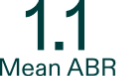

Total bleeds [treated and untreated]
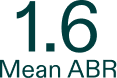
The mean is the average of a set of numbers. The median is the middle value in a set of numbers arranged from smallest to largest.
BASIS KIDS study results—without inhibitors (n=22)
Without Inhibitors
Primary objective
Treated bleeds
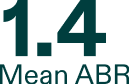
Secondary objective
Joint bleeds [treated]
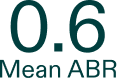
Target joint bleeds [treated]
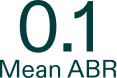
Spontaneous bleeds [treated]
Total bleeds [treated and untreated]
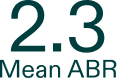
The mean is the average of a set of numbers. The median is the middle value in a set of numbers arranged from smallest to largest.
BASIS KIDS study results—with inhibitors (n=7)
With Inhibitors
Primary objective
Treated bleeds

Secondary objective
Joint bleeds [treated]
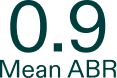
Target joint bleeds [treated]
Spontaneous bleeds [treated]
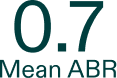
Total bleeds [treated and untreated]
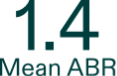
The mean is the average of a set of numbers. The median is the middle value in a set of numbers arranged from smallest to largest.
BASIS KIDS study results—without inhibitors (n=14)
Without Inhibitors
Primary objective
Treated bleeds

Secondary objective
Joint bleeds [treated]
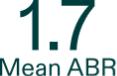
Target joint bleeds [treated]

Spontaneous bleeds [treated]
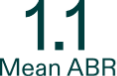
Total bleeds [treated and untreated]
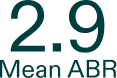
The mean is the average of a set of numbers. The median is the middle value in a set of numbers arranged from smallest to largest.
BASIS KIDS study results—with inhibitors (n=7)
With Inhibitors
Primary objective
Treated bleeds

Secondary objective
Joint bleeds [treated]
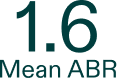
Target joint bleeds [treated]
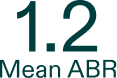
Spontaneous bleeds [treated]
Total bleeds [treated and untreated]
The mean is the average of a set of numbers. The median is the middle value in a set of numbers arranged from smallest to largest.
Before a child under your care starts using HYMPAVZI, it is very important to talk to their doctor about using factor VIII and factor IX products or bypassing agents while using HYMPAVZI. The child may be prescribed factor VIII or factor IX medicines or bypassing agents to treat episodes of breakthrough bleeding while using HYMPAVZI. Carefully follow healthcare provider instructions regarding when to use these medicines and the prescribed dose during their treatment with HYMPAVZI. Do not use additional doses of HYMPAVZI to treat breakthrough bleeds.
†BASIS KIDS is an ongoing study. Data shown for BASIS KIDS were interim.

Meet the once-weekly, fixed-dose* pens
‡In the BASIS study, patients ages 12+ without inhibitors achieved a 92% reduction in treated bleeds on HYMPAVZI compared with on-demand factor-based treatment (3.2 ABR vs 39.9 ABR) and a 35% reduction in treated bleeds on HYMPAVZI compared with routine factor-based prophylaxis treatment (5.1 ABR vs 7.9 ABR). Patients ages 12+ with inhibitors achieved a 93% reduction in treated bleeds on HYMPAVZI compared with on-demand bypass agent treatment (1.4 ABR vs 19.8 ABR).

Having a family member or child with a bleeding disorder can affect many people in the household. Here are some simple caregiver thoughts and tips from the National Bleeding Disorders Foundation.

Having honest conversations about roles and responsibilities within the family can help avoid caregiver burnout. Make a list of tasks, big and small, and divide them up so everyone shares the work.

Your local NBDF chapter can offer ways to connect with people who understand what it's like to live with a bleeding disorder. You are not alone, and talking with others who understand can help.